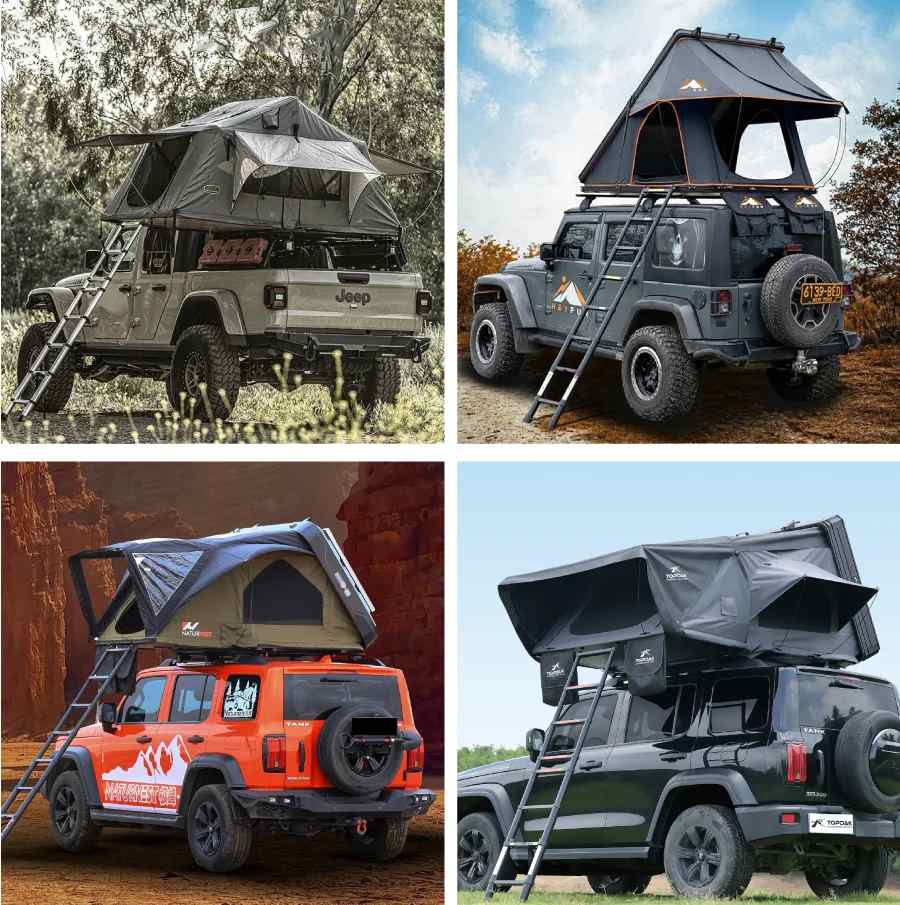
If you've spent any time scrolling through overlanding forums or camping YouTube channels, you've seen them - rooftop tents (RTTs) mounted on everything from Toyota 4Runners to Jeep Wranglers, Land Cruisers to lifted Subarus. The appeal is obvious once you've experienced one: you're up off the ground, away from mud, critters, and uneven terrain. In summer, that elevation means a cool breeze flows through. In winter, you're separated from the cold, damp ground.
But the convenience is what wins people over. As the 4WD Supacentre team points out in their 2023 buyer's guide, three out of four modern rooftop tent styles use internal gas struts that make setup nearly hands-free. And here's the killer feature: you can leave your bedding inside when you pack it down. Sleeping bags, pillows, foam toppers - all of it stays in place, cutting setup and pack-up time dramatically. It also frees up precious cargo space inside your vehicle.
Outdoor Auto, who has tested over 20 tents across years of real-world use, frames the decision differently: "What's best for me might not be best for you." That's the honest starting point. The right tent depends on your vehicle type, who's sleeping in it, your budget, and how much you value ease of use.
Both Outdoor Auto and 4WD Supacentre independently arrive at the same four-category breakdown. Here's what each style brings to the table:
Style 1: Fold-Out (Softshell) Tents
The classic design. A clamshell that unfolds over the side of your vehicle, creating a large sleeping platform with an overhang supported by a ladder. These are typically the most affordable entry point and offer the most interior space per dollar. The downside: setup takes a bit longer (unzip, unfold, set up poles, install rainfly), and pack-down requires folding fabric neatly so the cover zips shut. But for families or anyone on a tighter budget, this is where serious value lives.
Style 2: Pop-Up / Wedge Tents
These are the ones you see on sleek SUVs. A low-profile aerodynamic shell pops up on gas struts, creating a wedge-shaped sleeping space. Outdoor Auto notes these look fantastic on SUVs and Jeeps with long flat roofs. Setup is incredibly fast - literally 30 seconds. The trade-off: interior space is more limited, and on short-bed trucks you'll need a taller rack to avoid overhang. This category has seen massive growth thanks to competitive pricing from direct-manufacturer brands.
Style 3: Side-Opening (Clamshell Hardtop) Tents
Instead of popping straight up, these open horizontally like a book. The advantage is a massive covered entry area and typically more interior headroom on one side. They're excellent for taller campers who want to sit up comfortably. The foot print on your roof rack is larger, so you'll want to confirm compatibility. 4WD Supacentre highlights these as a favorite for those prioritizing comfort over aerodynamics.
Style 4: Aluminum Hardtop Tents
The premium category. Full aluminum hard shells that are bombproof in weather, extremely durable, and often feature integrated solar-ready surfaces. Outdoor Auto ranks these highest for serious overlanders who face extreme conditions. The downsides: weight (often 170–220 lbs) and price. But here's the thing: the aluminum shells on many $3,500+ US-branded hardtops come from the exact same extrusion lines as direct-from-factory models priced at half that.
CNN sent journalist Kai Burkhart to Moab, Utah with a Thule Approach (softshell) rooftop tent for a six-night real-world test - and timed every setup and takedown against a traditional ground tent. The results are worth paying attention to before you spend a dime.
Setup Speed: The Numbers Don't Lie
|
Task
|
Rooftop Tent (Thule Approach) |
Ground Tent (Nemo Dagger 2) |
|
Setup Time
|
2.5 minutes |
7.5 minutes |
| Takedown Time |
5 minutes |
5.5 minutes |
| Total |
7.5 minutes |
13 minutes |
Even a softshell RTT - the slowest rooftop tent style to set up - still clocked in nearly twice as fast as a quality ground tent. And here's a detail most reviews skip: the built-in mattress. At roughly two inches of foam permanently installed in the tent floor, you never inflate a sleeping pad again. CNN's tester, sleeping alongside his partner and a 45-pound dog for six straight nights, called it "way comfier than an inflatable sleeping pad."
Key Takeaway
Comfort is the rooftop tent's single biggest advantage. You get a real mattress, elevation away from rocks and mud, better airflow up high, and the ability to leave your sleeping bag and pillows inside when you pack down. If you prioritize a good night's sleep, the RTT wins every time.
The Honest Downsides (That Nobody Mentions in the Brochure)
CNN's testing surfaced three real-world friction points that matter:
1. Gas mileage takes a hit. After a month with the tent mounted, the tester recorded a 2–3 MPG drop. For a weekend road trip that's negligible. For a cross-country overlanding expedition spanning thousands of miles, that adds up fast - both in fuel cost and range anxiety between gas stations.
2. You must pack up to drive anywhere. With a ground tent, you set up Friday evening and leave it for the weekend. With a rooftop tent, every trailhead run, grocery trip, or spontaneous detour means folding the tent back down and setting it up again when you return. It's a 7.5-minute round trip each time - manageable, but not nothing.
3. Level parking is harder than level ground. Finding a flat patch of dirt for a ground tent is easy - walk around, scout, done. Finding a spot where your entire vehicle sits level is trickier, especially on uneven campsites. You'll want leveling blocks or at least a well-placed rock under a tire.
Here's the honest math. Softshell rooftop tents typically run $1,000–$2,500 through US retailers. Hardshell models easily cross $3,000. Meanwhile, a spacious, high-quality ground tent with all the accessories costs under $500. CNN's verdict: "If you have the money and comfort is your number one priority, you're never going to get a better night's sleep outdoors than in a rooftop tent."
Morland Advantage: DDP Shipping
DDP (Delivered Duty Paid) means the price you're quoted includes the product, international shipping, customs clearance, and import duties. There are no surprise fees when the tent arrives at your door. For US and European buyers, this eliminates the biggest friction point
The rooftop tent supply chain is surprisingly straightforward when you break it down. Every tent starts at a manufacturer. By the time it reaches a retail shelf, it's passed through an importer, a distributor, and a retailer - each adding their margin. Go factory direct, and you remove every layer between you and the builder.
Factory Direct (Morland)
Aluminum alloy frame - not steel, no rust
ABS hard shell on wedge/pop-up models
DDP (Delivered Duty Paid) - you know the total price upfront
Direct communication with the manufacturer
Same extrusion-grade aluminum as premium brands
Customization options (logo, color, accessories)
No middleman markup - typically 40–60% less
Typical Brand Reseller
Brand recognition and marketing
Local warranty & dealer support network
Importer margin: +15–25%
Distributor margin: +15–20%
Retailer margin: +30–50%
You pay for their marketing budget
Often same factory as direct options
Drawing from all three video sources, here are the non-negotiable questions to answer before purchasing any rooftop tent:
Factor 1: Your Vehicle's Roof Load Capacity
This is the number one mistake first-time buyers make. 4WD Supacentre is emphatic about this: your vehicle's dynamic roof load rating (the weight it can carry while driving) is different from its static rating (parked, with people inside). Most crossbars are rated for 150–165 lbs dynamic. A typical hardtop tent weighs 150–220 lbs by itself. You need to check your specific vehicle's manual and roof rack specifications before committing. Ute tub racks and dedicated roof platforms can increase capacity significantly.
Factor 2: Who's Sleeping in It?
Outdoor Auto frames this perfectly: a wedge tent that sleeps two adults comfortably becomes a torture chamber with two adults and a 50-pound dog. If you're camping solo or as a couple, wedge and pop-up tents work beautifully. For families, fold-out softshells offer the most spacious footprint - some models sleep 3–4 people. Know your occupancy before you shop.
Factor 3: Ease of Use
If your tent takes 15 minutes to set up and you dread dealing with it, you won't use it. Gas-strut-assisted tents (pop-up, wedge, side-opening) go up in under a minute. Fold-out softshells take 5–10 minutes. Ask yourself honestly: how often will you actually camp, and how much setup friction will you tolerate?
Factor 4: Material Construction
This is where factory-direct buying gives you an edge. When you deal with Morland directly, you can ask specific questions: What grade aluminum is the frame? (6061-T6 or 6063?) What denier is the tent fabric? (210D? 280D? 420D?) Is the rainfly PU-coated? What's the waterproof rating in mm? With a generic Amazon listing, you're guessing. With a named manufacturer, you get real answers.
Factor 5: Total Landed Cost
The sticker price is deceptive. A "$899" tent on a US website could cost $1,200 after tax and shipping. A "$750" factory-direct DDP quote from Morland is literally $750 to your door. Always calculate the out-the-door total, not the advertised price.
Top 10 Roof Top Tent FAQs - Knowledge
Based on the insights gathered across all three expert sources, combined with what's available through factory-direct channels, here are the best rooftop tent recommendations for 2023:
Best Overall Value: Fold-Out Softshell (Aluminum Frame)
The fold-out softshell with an aluminum frame hits the sweet spot of space, durability, and price. Outdoor Auto and 4WD Supacentre both agree this category offers the most tent for your money. When sourced factory direct with an aluminum frame (not steel), you eliminate the rust risk while keeping costs low. Morland's softshell line uses aluminum framing, ripstop canvas, and includes a PU-coated rainfly - the same specs you'd find on tents retailing for $1,200+.
Best for Quick Setup: Wedge / Pop-Up Hardtop
If 30-second setup and a sleek profile matter more than interior space, the wedge is your tent. ABS hard shells with aluminum substructure are the standard here. Morland's wedge tents feature gas-strut lift assist, integrated LED lighting channels, and a low-profile design that tucks neatly against your roof rack. These are ideal for weekend warriors who camp frequently and want zero friction between arriving and sleeping.
Best for Serious Overlanders: Side-Opening Aluminum Hardtop
For those who face real weather, the full aluminum hardtop with side-opening design provides unmatched durability. The covered entry area doubles as a porch when propped open. Morland's aluminum hardtop line uses aluminum sheets, welded corners, and module design - features that premium US brands charge $3,000+ for.
Conclusion: You're Buying a Tent, Not a Brand Story
You can pay $1,200–$3,500 for a US-branded tent that was manufactured in China, shipped to a US warehouse, marked up by an importer, marked up again by a distributor, and marked up a third time by a retailer. Or you can go factory direct - dealing with the actual manufacturer, using the same materials and construction techniques, at roughly half the price.
7 essential tips for safe & efficient wild adventures with a roof top tent.
Morland checks all these boxes. As a direct manufacturer supplying overseas markets via DDP shipping, we offer the same construction quality that powers the big-name US brands - without the brand tax. Whether you're outfitting your first overland rig or expanding your retail inventory, going factory direct is the smartest move in the rooftop tent market.
Ready to Skip the Middleman?
Contact Morland today for factory-direct pricing on aluminum-frame softshell tents, ABS wedge tents, and full aluminum hardtops.
DDP shipping to your door - no surprises, no brand markup, just the tent.
Get a Quote
Sources & References: This guide synthesizes insights from three leading rooftop tent review videos on YouTube: Outdoor Auto's "ROOFTOP TENT BUYING GUIDE - 20 Tents in 20 Min" , 4WD Supacentre's "The ULTIMATE guide to buying a ROOFTOP TENT - updated for 2023!" , and CNN's "Are rooftop tents worth the money?" .
Referenced Videos:
• Outdoor Auto: ROOFTOP TENT BUYING GUIDE - 20 Tents in 20 Min
• 4WD Supacentre: The ULTIMATE guide to buying a ROOFTOP TENT - 2023
• CNN: Are rooftop tents worth the money? 6-night field test in Moab, Utah