

What's Changed in 2024
For years, rooftop tents sat in two buckets: premium ($3,000–$5,000) and Amazon listings. In 2024, a third category emerged: factory-direct brands with genuine build quality at $1,000–$1,800. These tents use the same aluminum grades, the same fabrics, and often the same extrusion lines as the premium brands. The only thing missing is the brand tax.
1. The 2024 Rooftop Tent Landscape
Entry-Level Wedge Tent (2024)
$1,299
Setup Time - Hard Shell
~2 min
Price Gap: Budget vs Premium
3×
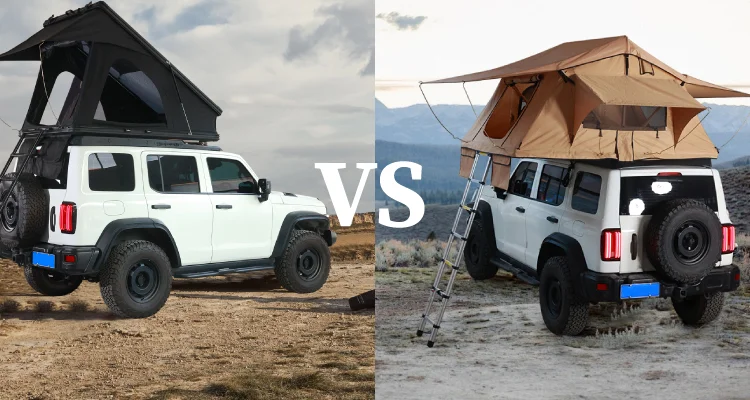
Casey 250, one of the most trusted voices in the overlanding community, put it bluntly in his 2024 edition buyer's guide: "You can probably buy almost three of these tents for the price of one of those." He was comparing the Topoak Galaxy 1.0 ($1,299) to the Roofnest Falcon Pro ($3,500+). The takeaway wasn't that the cheaper tent was "good enough" - it was that the gap had narrowed so much, casual overlanders had little reason to pay triple.
This shift didn't happen overnight. Outdoor Auto traced the supply chains. They found that the $1,600 Amazon tent and the $4,000 brand-name tent shared the same basic architecture: wedge design, gas-strut lift, aluminum honeycomb floor. The price difference came from the supply chain - not the factory floor.
In 2024, the smart buyer isn't asking "which tent is best?" They're asking "how much of that price tag is tent, and how much is brand story?"
2. Hard Shell vs Soft Shell: What 200 Nights Teaches You
Key Takeaway
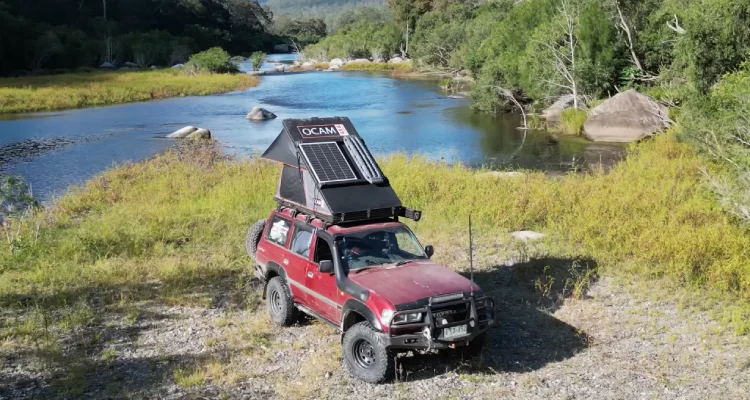
Aussie Arvos spent 200+ nights in rooftop tents over 3 years, testing soft shells and hard shells across Australia's East Coast. His conclusion is unequivocal: if you're buying in 2024, buy a hard shell.
Setup Speed
Aussie Arvos breaks it down with brutal honesty. His old soft-shell tent took 5–7 minutes to set up properly. His new aluminum hard shell? 30 seconds. That's not a minor convenience - it's the difference between setting up camp after a long drive when you're exhausted, versus groaning at the thought of wrestling with poles and canvas. Casey 250 echoes this: gas-strut-assisted wedge tents deploy in under a minute. Push it up, climb in, done.
Aerodynamics and Fuel Economy
One of the most under-discussed realities of rooftop tent ownership is what it does to your fuel bill. Aussie Arvos reports a consistent 2–3L/100km increase in fuel consumption with a tent on the roof. A hard shell tent, particularly a slimmer wedge design at 140mm thickness, minimizes this penalty compared to a bulky soft shell that creates a brick-like aerodynamic profile at highway speeds.
The new generation of slim aluminum tents - 140mm thick instead of the older 160mm standard - makes a measurable difference. As Aussie Arvos notes: "It's one of the thinnest rooftop tents you can buy. It's incredibly slimline, so if you care about how sleek it looks on your car, this is a big advantage."
Durability Over Time
|
Factor |
Soft Shell (Fold-Out) |
Hard Shell (Aluminum Wedge) |
|
Setup Time |
5–8 minutes |
30–60 seconds |
|
Thickness (Closed) |
10–14 inches |
5.5–6.3 inches (140–160mm) |
|
Aero Penalty |
High - blocky profile |
Low - wedge shape cuts wind |
|
Shell Strength |
Fabric cover - tears, UV damage |
Aluminum/ABS - weatherproof, strong |
|
Gas Strut Life |
N/A (pole-based) |
Replace every 2–3 years (heavy use) |
|
Awning Mounting |
Limited - flexes under weight |
Strong - mount accessories directly |
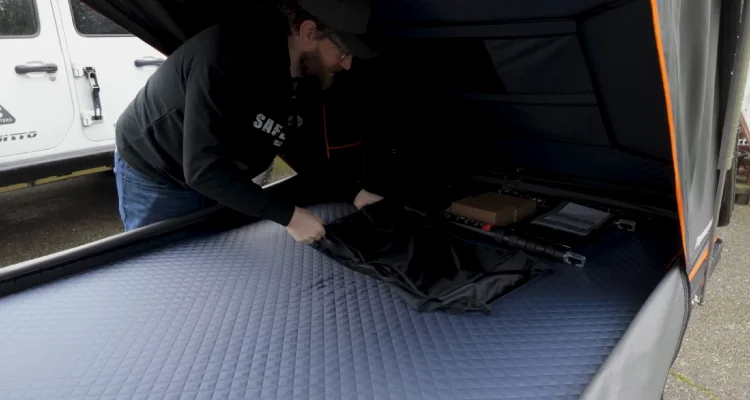
After 2 years of hard use, Aussie Arvos's original soft-shell tent was "still going strong" - but only after upgrading key components. His new aluminum hard shell solved every major pain point: it's stronger, quieter on the highway, and mounts accessories without sagging. The one maintenance item he flags: gas struts need replacement after heavy use, a $50 fix that takes 10 minutes.
3. The $1,300 vs $4,000 Test - What You Actually Get
Outdoor Auto's 500-Mile Verdict
Outdoor Auto took two tents - the affordable Topoak Galaxy and the premium Roofnest Falcon Pro - on a 500-mile overland trip through rain, sleet, and heat. Then they compared them side-by-side on camera. Their findings challenge everything the premium brands want you to believe.
Shared Architecture, Different Price Tags
Both tents are wedge-style hard shells with gas-strut-assisted lifts, aluminum honeycomb floors, and similar dimensions. Outdoor Auto found the structure was essentially identical. The differences came down to finishing details, not fundamentals:
- Fabric Tension System: The Roofnest uses a more sophisticated tensioning mechanism that keeps the fabric tighter in wind. The Topoak fabric is slightly looser but still weather-tight.
- Mattress: The Roofnest ships with a marginally thicker mattress. Casey 250 noted the Topoak mattress is one of its weakest points - but a $50 mattress topper solves this completely.
- Accessories & Fan: The Roofnest includes an integrated fan system. Outdoor Auto found it noisy and of limited use. The Topoak keeps things simpler, which actually improves reliability.
- Shipping & Support: Both tents arrived with minor shipping damage (a reality Outdoor Auto says happens to every tent they've ever received). The Topoak support team responded faster and handled the insurance claim more efficiently than Roofnest.
The Numbers Don't Lie
|
Feature |
Topoak Galaxy / Value Tier |
Roofnest Falcon Pro / Premium Tier |
Morland Factory Direct |
|
Price |
$1,299 |
$3,500–$4,000 |
$800–$1,500 |
|
Shell Material |
Aluminum + ABS |
Aluminum + ABS |
Aluminum + ABS hard shell |
|
Setup Time |
~60 seconds |
~60 seconds |
~60 seconds |
|
Shipping |
US warehouse, freight |
US warehouse, freight |
DDP Worldwide - no surprise fees |
|
You're Paying For |
The tent |
The tent + importer + distributor + retailer + brand marketing |
The tent, directly from the manufacturer |
Casey 250's conclusion: "This is 90% of the tent for one-third of the price." For the casual overlander - someone who camps a dozen weekends a year, not 200 nights - the premium tier simply doesn't justify itself.
4. Key Buying Factors for 2024
Factor 1: Hard Shell is the New Baseline
All three sources agree: if you're buying a rooftop tent in 2024, buy a hard shell. Faster setup, better aerodynamics, stronger construction, and more accessory mounting options. The price gap between hard and soft shells has shrunk to the point where soft shells only make sense if you absolutely need the larger floor space of a fold-out king-size design - and you're willing to pay for it in setup time and highway efficiency.
Factor 2: Gas-Strut Quality Matters
After 200 nights, Aussie Arvos's hard-shell tent needed new gas struts. This is normal wear and tear - a $50 part that takes 10 minutes to replace. But it's also a reminder that build quality varies. Premium brands use higher-spec struts that last longer; value brands use adequate struts that work fine but need earlier replacement.
Factor 3: Don't Pay for the Supply Chain
Outdoor Auto's investigation revealed something important: the tent you buy from a US brand for $4,000 and the tent you buy factory-direct for $1,200 may have come from the same extrusion line. The difference is the importer's margin (15–25%), the distributor's margin (15–20%), and the retailer's margin (30–50%). That's up to 95% markup before the tent even reaches your hands - and none of it goes into the tent.
Factor 4: Customer Support - The Hidden Differentiator
One of the most revealing moments in Outdoor Auto's test was the customer support comparison. When both tents arrived damaged (a common reality of freight shipping), the direct-from-manufacturer brand responded faster and resolved the claim more efficiently than the premium brand. Why? Because you're talking to the people who built the tent, not a call center three corporate layers deep. Factory-direct customer service is often better because the accountability chain is shorter.
Top 10 Roof Top Tent FAQs - Knowledge
5. Why Factory Direct Changes Everything in 2024
The Morland Model
As a manufacturer with our own production facility, Morland operates at the source of the supply chain. We control materials, quality assurance, and pricing - because there are no middlemen between us and you.
Factory Direct (Morland)
DDP shipping - you know the total price upfront;
Direct communication with the manufacturer;
Same extrusion-grade aluminum as premium brands;
Customization options: logo, color, accessory bundles;
Typically 50–65% less than brand-reseller equivalents;
The trade-off? You'll wait a bit longer for global shipping;
Typical Brand Reseller
Brand recognition and marketing presence;
Local dealer network for in-person purchase;
Importer margin: +15–25%;
Distributor margin: +15–20%;
Retailer margin: +30–50%;
You pay for their advertising, trade shows, and influencer sponsorships;
In 2024, the rooftop tent market is transparent in a way it wasn't three years ago. Tools like Import Yeti, Reddit communities, and channels like Outdoor Auto have pulled back the curtain on supply chains. Buyers now know that a $4,000 tent and a $1,300 tent can share the same DNA. The difference is who you buy from - and how many hands touch your money before it reaches the factory.
Morland fits into this new reality perfectly. We don't spend your money on Instagram ads or trade show booths. We spend it on aluminum extrusions, quality fabric, and rated gas struts. Then we ship the tent to your door - DDP, so the price you see is the price you pay.
6. Conclusion: The Smart Money in 2024
Three years ago, buying a rooftop tent meant choosing between a premium brand you trusted and a cheap Amazon listing you didn't. In 2024, that binary is gone. The market has matured. You can now buy a well-built aluminum hard-shell wedge tent - for one-third of what a premium brand charges for the same architecture.
Casey 250 spent 13 minutes walking buyers through the reality: the gap between a $1,299 tent and a $3,500 tent is details, not fundamentals. A slightly better mattress. A tighter fabric tension. A fan that's noisy anyway. For 90% of buyers, these are not reasons to triple the budget.
Aussie Arvos spent 200 nights confirming what matters and what doesn't. What matters: speed of setup (hard shell wins), aerodynamics (slim wedge wins), shell strength (aluminum wins), and gas-strut reliability. What doesn't matter: the logo on the side.
Outdoor Auto spent 500 miles and two days of customer support emails proving what the industry doesn't want you to know: factory-direct brands deliver comparable products with better support - because the accountability chain is shorter.
If you're buying a rooftop tent in 2025, buy a hard shell. Buy from someone who builds them, not someone who rebadges them. And buy DDP - because surprise customs fees are the worst kind of camping accessory.
Browse Morland Rooftop Tents - Factory Direct, DDP Worldwide
Sources & References: This guide synthesizes insights from three leading 2024 rooftop tent review videos on YouTube:
• Casey 250: Don't Buy an Expensive Roof Top Tent Until You See This - 2024 Edition
• Aussie Arvos: 3 Years with a Roof Top Tent - Would I Do It Again?
• Outdoor Auto: Amazon's Best Rooftop Tent VS Roofnest Falcon Pro


