Why this guide is different
Why this guide is different: We're not listing "top 5" tents. We're walking through what experienced owners and professional reviewers actually say matters - the concerns, the solutions, and the buying approach that saves you real money. If you're serious about getting a rooftop tent in 2026, this is the reading that earns its keep.
How to Choose a Rooftop Tent: 5 Factors That Actually Matter
Every rooftop tent buyer eventually asks the same questions. Jayce, who documented his own tent-buying journey at iKamper's showroom, identified the five factors that separate a purchase you love from one you regret. The good news: every single one has a solution.
Yes, a quality rooftop tent from a US brand runs $2,000–$5,000. Add mounting hardware ($200–$600) and accessories, and the total climbs quickly. But here's what the brands won't tell you: that same tent's bill of materials - the aluminum, the fabric, the gas struts, the ABS shell - costs the factory a fraction of retail. The price gap between what a tent costs to build and what it sells for is almost entirely supply chain markup. Skip the chain, and the math flips completely. We'll get to that in Section 4.
Expect a 2–5 MPG drop with a tent on your roof. But not all tents are equal here. A low-profile wedge hard shell slips through the air far better than a bulky folded soft shell. If you daily-drive your rig, aerodynamics should be near the top of your checklist - and a streamlined hard shell can keep the MPG penalty closer to 2 than 5.
At highway speeds, every rooftop tent generates some wind noise. The difference: hard shells with a wedge profile are significantly quieter than fabric-covered soft shells. Fairings help on either type, but the shape is the bigger factor. If highway cruising is a big part of your trips, lean hard shell.
Adding 10–14 inches to your vehicle height means parking garages and low drive-throughs become off-limits. The fix is simple: measure your vehicle height now, add the tent's closed height, and compare to the clearances you encounter daily. If your numbers work, this concern disappears. If they don't, a lower-profile hard shell can shave 2–4 inches off compared to a bulky soft shell fold-out.
A hard shell tent weighs 150–220 lbs; a soft shell, 100–150 lbs. Add 40–80 lbs for crossbars or a platform rack. The key number is your roof's dynamic weight rating - what it can hold while driving (not parked). If your factory crossbars top out at 150 lbs dynamic and your tent weighs 160 lbs, you need upgraded crossbars. Check this before ordering; it's the #1 compatibility issue new buyers miss.

Bottom line
Every one of these concerns has a clear fix. Price? Go factory direct. Fuel economy and wind noise? Choose a low-profile hard shell. Clearance? Measure first. Weight? Match the tent to your rack rating. None of these are deal-breakers - they're just the checklist.
The Ultimate Rooftop Tent Installation Guide: Mounting, Weight Limits & Mattress Tips
Chase Schrader has run rooftop tents on his rig for years. His advice covers the details that don't appear in product listings but matter every time you camp.
Mounting: Get the Rack Right, First Time
You have three options:
- Factory crossbars: Convenient, but check the dynamic weight rating - many cap at 150 lbs. That rules out most hard shells.
- Aftermarket crossbars (Thule, Yakima, Rhino-Rack): 165–220 lbs dynamic. Enough for most soft shells and lighter hard shells.
- Platform rack (Front Runner, Prinsu): 300+ lbs dynamic. Handles any tent. Costs more and adds weight, but solves the rating issue permanently.
Critical spec
Dynamic weight rating (driving) ≠ static weight rating (parked). Your tent weight + rack weight must stay under the dynamic rating. A 180 lb tent on 60 lb crossbars needs at least 240 lbs dynamic capacity.
Mattress Quality: The Spec You'll Feel Every Morning
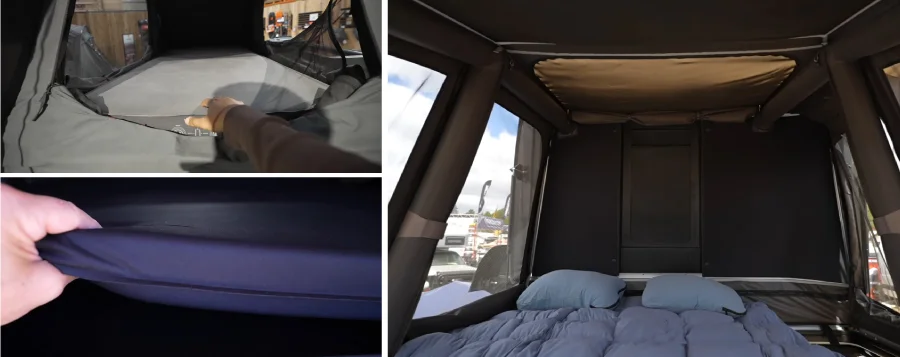
Not all rooftop tent mattresses are equal. Entry-level tents ship with 2–2.5 inches of basic foam - functional, but many owners upgrade within a year. Mid-tier and premium models increasingly include self-inflating or dual-layer mattresses. An extra inch of foam is the difference between waking up ready to hike and waking up sore. When comparing tents, look past the shell and ask about the mattress.
Condensation: Why Ventilation Design Matters
Moisture from your breath condenses on tent walls, especially in cold weather. Tents with cross-flow windows and breathable canopy fabrics manage this well. Tents without adequate venting leave you with damp sleeping bags by morning. Hard shells tend to handle condensation better - their sealed design and integrated vents create more controlled airflow than soft shells with zippered windows.
Setup Speed: What "30 Seconds" Actually Means
A wedge hard shell genuinely deploys in under 30 seconds - unlatch, push up, done. A soft shell fold-out takes 5–8 minutes including the ladder, poles, and fly. But "setup" includes leveling the vehicle, arranging bedding, and deploying annexes. Real-world, parking-to-sleeping: 5 minutes for a hard shell, 15 for a soft shell. If you move campsites daily, that 10-minute difference multiplies fast.
How to Beat Rooftop Tent Prices: Factory Direct vs Retail Markup
Remember Factor 1 - price? Here's where it resolves. When Matt Zefi picked up his tent from a US showroom, he paid the full retail chain markup: factory → importer → distributor → retailer → customer. Each layer adds margin. The result: a tent that costs $400–$600 to manufacture sells for $2,500–$4,500 by the time it reaches you.
Remove those layers, and the same tent costs $1,200–$1,800 - delivered to your door. That's not a discount. That's the actual economics of making a tent and shipping it directly.
Typical retail markup over factory cost
2X~3X
Morland factory-direct price
$500–$1,800
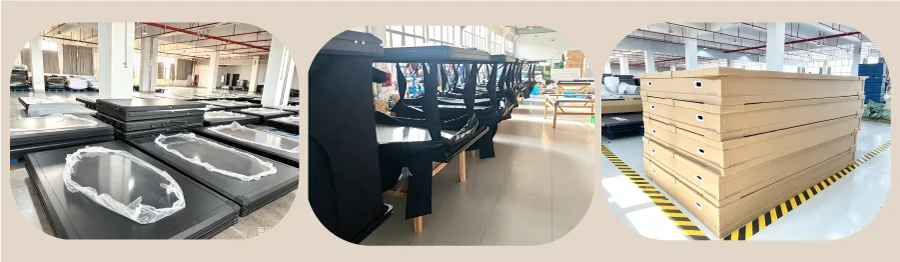
Morland operates as a direct manufacturer. We build hard shell and soft shell rooftop tents using the same materials premium brands rely on - and ship them directly to you under DDP terms. The tent arrives at your door with customs, duties, and freight all included in the price you were quoted. No surprises.
What this looks like in practice
An aluminum hard shell tent, gas-strut deployment, 2.inch mattress, matched free telescopic ladder, and integrated LED lighting lands at $1,200–$2,000 delivered. The equivalent through brand retail: $2,800–$4,200. And we think you'd rather spend that money on your next trip.
Your Next Steps
You now know what experienced owners wish they'd known before buying. You know the soft-vs-hard trade-offs. And you know there's a smarter way to buy. Here's what to do next:
1.Measure your vehicle. Roof weight rating (dynamic), current vehicle height, and garage clearance. These three numbers determine which tent fits.
2.Pick your style. Daily road-tripper who moves campsites often → hard shell. Family camper who sets up base camp for the weekend → soft shell.
3.Reach out to Morland. Tell us your vehicle, your camping style, and your budget. We'll recommend a tent that fits - and ship it factory-direct with DDP so there are zero surprises at delivery.
Ready to Skip the Markup?
Contact Morland directly for pricing, specifications, and shipping details on our 2026 hard shell and soft shell rooftop tent lineup. Factory-direct. DDP shipping. Aluminum and ABS construction built to last.
Sources & References:
MotoXposure: IKAMPER SKYCAMP DLX | BEST ROOFTOP TENT IN 2025?
Chase Schrader (Adventure Built): TOP Rooftop Tents You Need to See from Overland Expo West 2025